


According to the Grattan Institute, household electricity bills in some states increased by up to 20% last year and look set to continue this upward trend.
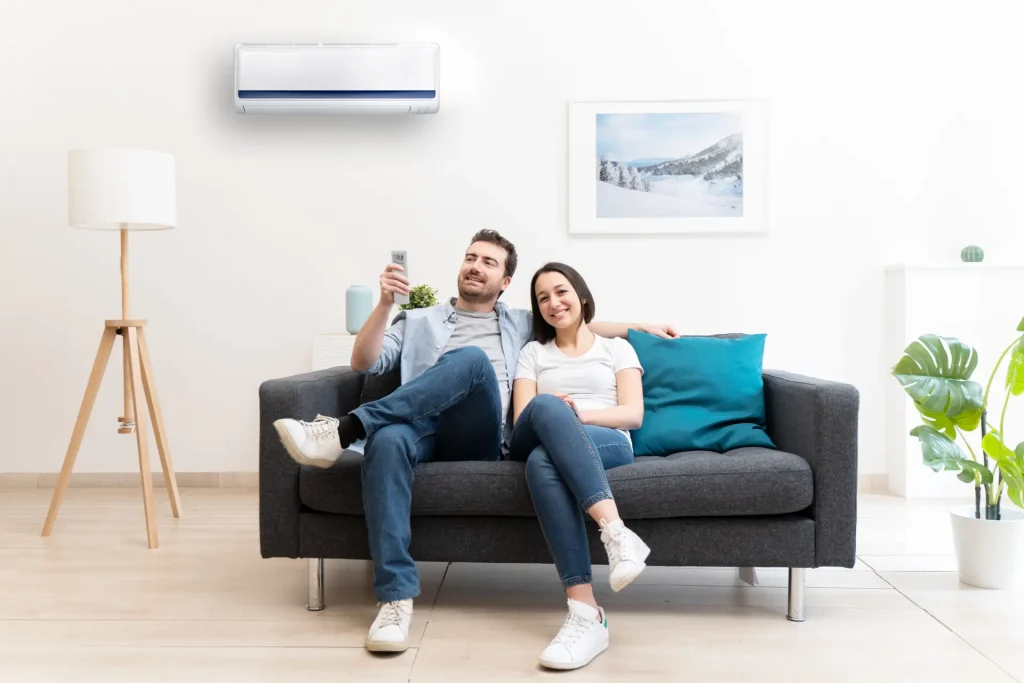
Regardless of the type of air conditioning system here are some ways you can reduce your energy bills, saving you money without compromising on your comfort.
Choose the right air conditioner
First things first. If you’re looking to lower power bills, then you need to choose the right air conditioner. This is because if the unit’s too big, it will have short cooling and heating cycles which will use up a lot of energy. If it’s too small, it will have to work harder to warm up or cool down your home, which will also add to your electricity bills.
You should also check how much energy it uses by comparing the heating and cooling input and output of different models, which is measured in terms of kilowatts (KW). The size of your home, the rooms it needs to heat and cool and other internal heating or cooling sources can also influence the type of air conditioner you need.
Energy rating labels are a great way of comparing models. These labels have a star rating (from one to six) which measure both heating and cooling efficiency. The more stars a unit has, the more energy efficient it is and the cheaper it will be to run. Super-efficient models will have a rating of between seven and 10 stars.
Manage your temperature strategically.
Most experts recommend maintaining the temperature setting at around 23℃-24℃ in summer and around 18℃-19℃ in winter ensures your system is working at its most efficient. Every degree decrease in summer or increase in winter from these settings could add 10% to your energy bill according to Origin Energy.
During summer turn your air-conditioner on early rather than working it harder once your home warms up.
Set the air conditioning unit to Economy Mode. Many air conditioners have an Economy Mode setting which limits the power consumption of the unit thus reducing running costs.
Use your air conditioners Sleep Mode or timers for cooling and heating during the night. This feature ensures a comfortable night’s sleep with economic heating/cooling control. Our bodies generally require less cooling when we’re asleep. The Sleep Mode on your air conditioner will regulate the air around you throughout the night automatically, allowing you a comfortable night’s sleep without using excess energy.
If you have a ducted air conditioning system use the zoning system. Turn off zones that are not in use and close the doors to these areas.
Hot air rises so it’s best to adjust the louvers on split-system air-conditioners so air flows downwards when heating and upwards when cooling.
Climate proof your home
Close off unused areas of the home – if bedrooms rarely get used throughout the day close the doors to keep cooling/heating to areas in use. The opposite applies for night use when living areas are empty.
Install effective insulation. Ceiling and wall insulation can boost your home’s climate control measures by keeping the cool in and the heat out in summer and the reverse in winter.
Other methods of insulation can also help. In winter open your curtains during the day, block draughts and cracks with door and window seals, place carpet or mats on floor tiles. In summer using curtains, blinds or awnings to block out the sun can reduce the inside temperature by as much as 3℃. Block out curtains with a white backing facing out can further reduce heat by reflecting the sun and keeping rooms cooler.
Have your unit serviced regularly
Regular servicing and maintenance are essential to keep running costs down. Air conditioning units essentially help to filter dirt and bacteria from the air which unfortunately makes them susceptible to clogging. Clean filters and effectively functioning components allow the air conditioner to operate at its most efficient.
Maintenance generally includes measuring the airflow, flushing the drains, cleaning the ductwork, checking the refrigerant and the motor’s efficiency and replacing any filters if needed.
If you’re worried that your air conditioner is costing you too much to operate, we recommend having it checked by one of our licenced air conditioning technicians. Having it repaired and introducing a regular maintenance program saves on energy consumption, improves the inside air quality and prolongs the life of your unit.
However, in some cases, if the unit is very old a replacement may be the better option. Newer models must adhere to the government’s Minimum Energy Performance Standards and most of them will have a range of features that make them more energy efficient. And that means savings!
Interested in saving on your energy bills without compromising on your comfort?
Email us at office@ccah.com.au or call us on (02) 9144 4327 / (02) 4324 7400 and one of our experienced technicians will assist you determine the most efficient and economical air conditioning system for you.